
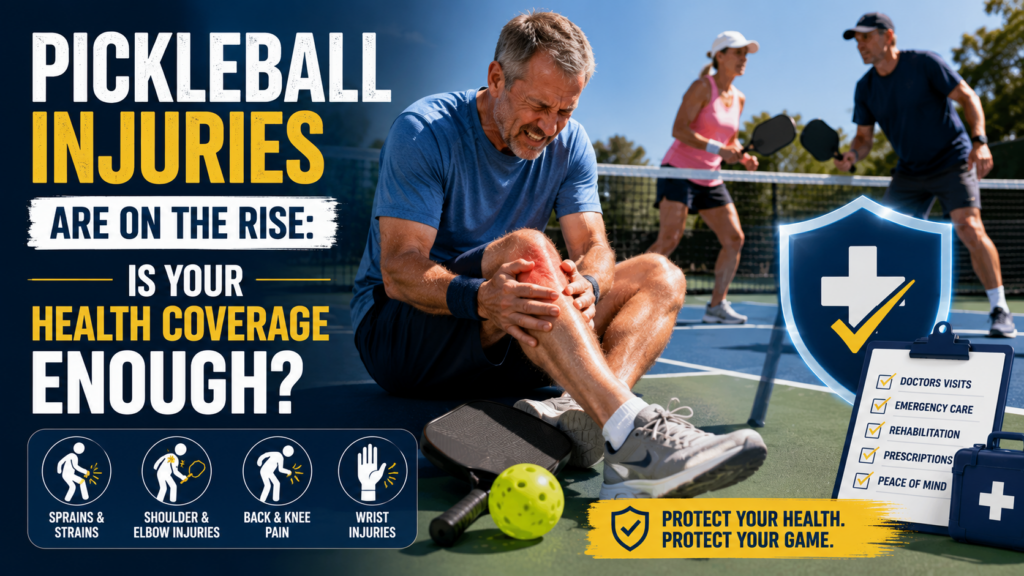
Pickleball has quickly grown into a popular activity among people of all ages. It offers a fun combination of social interaction, competition, affordability, and lower physical impact compared with many traditional court sports.
However, being lower impact does not mean it is completely free from injury risks.
As participation continues to grow, injuries involving the ankles, knees, wrists, elbows, and shoulders are becoming more common. What starts as a casual game with friends can sometimes result in an urgent care visit, diagnostic X-rays, physical therapy, or time away from work.That raises an important question:
Pickleball provides many benefits while requiring players to cover less ground than they would on a traditional tennis court. It can help improve:
- Cardiovascular health and endurance.
- Balance, agility, and coordination.
- Strength, flexibility, and mobility.
- Social connection and engagement.
- Overall physical activity and fitness levels.
However, the excitement of playing can sometimes lead people to increase their activity level too quickly without allowing their bodies enough time to adjust.
Who Is Most at Risk for Pickleball Injuries?
Although anyone can experience an injury while playing pickleball, research suggests that adults between the ages of 60 and 69 may face a higher risk.
- Have played pickleball for fewer than five years.
- Play more than three times per week.
- Skip proper warm-ups before playing.
- Wear running shoes instead of supportive court shoes.
- Continue playing despite pain, discomfort, or soreness.
- Increase their activity level too quickly.
- Move backward while trying to reach a ball.
- Have reduced balance, flexibility, or bone density.
New players are often eager to spend as much time on the court as possible. However, going from limited physical activity to playing multiple times a week can place added strain on muscles, joints, and tendons.
Common Pickleball Injuries
Sprains and strains
Sudden changes in direction can increase the risk of ankle sprains, knee injuries, and muscle strains. The ankle is one of the most commonly affected areas in acute pickleball injuries.
Pickleball elbow
Repeated backhand motions can strain and irritate the tendons on the outer part of the elbow. This condition is similar to tennis elbow and may require rest, modifying activities, or physical therapy to recover.
Achilles tendon injuries
Rapidly increasing how often or how intensely you play can put extra stress on the Achilles tendon. Ongoing soreness or discomfort should not be overlooked, as it may signal a need for rest or recovery.
Falls and fractures
Reaching beyond a comfortable stance or lunging for a ball can cause players to lose their balance. Falls may result in injuries such as wrist, ankle, or hip fractures, especially among older adults and individuals with lower bone density.
Fast-moving pickleballs, paddles, and unexpected falls can lead to facial, eye, or head injuries. Wearing protective eyewear may be a helpful precaution, especially during competitive games.
Spend a few minutes warming up by moving your major joints and gradually raising your heart rate before playing. Avoid going straight from your car onto the court and starting an intense game without proper preparation.
Running shoes are primarily designed for forward motion, while pickleball and court shoes provide better support for lateral movements and quick direction changes, which may help reduce the risk of ankle injuries.
Give your body time to adjust to the new activity level. Playing every day may not be suitable when you are just starting out.
Consider limiting pickleball sessions to three or four days per week and using rest days for activities like walking, swimming, cycling, or recovery.
Soreness that continues before your next game or pain that gets worse during play may indicate that your body needs time to recover.
Continuing to play despite pain can turn a minor issue into a more serious injury.
Whenever possible, position yourself on the court so you can move forward toward the ball instead of moving backward without knowing what is behind you.
Dehydration can lead to fatigue, dizziness, and slower reaction times, which may increase the risk of injury. Be sure to drink enough water before, during, and after playing.
When to Seek Medical Attention
Stop playing immediately if an injury occurs. For minor sprains or strains, applying ice and using gentle movement within a comfortable range may help while you arrange for appropriate medical care.
Seek medical attention promptly if:
- You are unable to put weight on an injured leg.
- You hear or feel a popping sensation at the time of injury.
- There is significant bleeding.
- A bone appears out of place or is visible through the skin.
- You experience a loss of consciousness.
- Pain or swelling is severe.
- Symptoms continue to worsen over time.
Even injuries that are not considered emergencies may still require follow-up care, diagnostic imaging, or physical therapy to support proper recovery.
Where Accident Insurance Can Help
Major medical insurance can help cover eligible medical treatments, but it may not pay for every cost that can result from an accident.
Depending on your health insurance plan, you may still need to pay for:
- Deductibles.
- Copayments.
- Coinsurance costs.
- Urgent care or emergency room expenses.
- X-rays and other diagnostic imaging costs.
- Physical therapy expenses.
- Medical equipment and supplies.
- Transportation-related expenses.
- Lost income or regular household bills during recovery.
That is where an accident insurance policy may help provide an added layer of financial protection against unexpected costs.
Accident insurance typically provides predetermined cash benefits for covered accidental injuries or related services. Depending on the policy, benefits may be available for situations such as:
- Emergency room or urgent care visits.
- Ambulance transportation.
- Fractures.
- Dislocations.
- Diagnostic testing and evaluations.
- Follow-up medical appointments.
- Physical therapy sessions.
- Hospital admission or inpatient stays.
The benefit is typically paid based on the policy’s coverage schedule and can usually be used however the policyholder chooses. The funds may help with medical costs or everyday expenses, including groceries, transportation, childcare, and household bills.
Coverage options, benefit amounts, exclusions, and limitations can vary depending on the policy. Accident insurance is not intended to replace major medical insurance, and all claims are subject to the terms and conditions of the selected plan.
Enjoy the Game—But Be Prepared for the Unexpected
Pickleball is a great way to stay active, connect with others, and enjoy some friendly competition.
The goal is not to stay away from the court. Instead, it is to take practical precautions and understand what your current coverage would and would not cover if an accident happens.
And while you are taking steps to protect your ankles and knees, it may also be worth reviewing your financial protection.
Kannonball Insurance Solutions can help you review your current coverage and determine whether accident insurance may help address potential gaps after a covered injury.
We protect the things that matter most—on the court and off.
Accident insurance is a supplemental coverage option and is not intended to replace comprehensive major medical insurance. Benefits, exclusions, limitations, and availability may vary depending on the policy and state.
source: bottomline.com