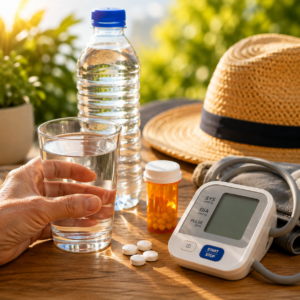
Summer Heat, Blood Pressure Medications, and Staying Safe

Summer Heat, Blood Pressure Medications, and Staying Safe

Hot weather can do more than make you uncomfortable. Rising temperatures, humidity, sweating, and dehydration may change how your body regulates blood pressure—and some medications can make those effects more noticeable.

That does not mean everyone taking blood-pressure medicine will have a problem when summer arrives. People respond differently based on their age, health conditions, medications, activity level, and the amount of time they spend in the heat. Still, understanding the possible risks can help you prepare before the next heat wave.

Why blood pressure may change during hot weather

Your body naturally tries to release heat by sending more blood toward the skin. Blood vessels may widen, which can lower blood pressure in some people. Sweating also causes the body to lose water and electrolytes. If those losses are not replaced appropriately, dehydration may develop.
The combination of wider blood vessels, fluid loss, and blood-pressure medication can sometimes contribute to lightheadedness, weakness, fainting, or falls. Other people may see their blood pressure rise when dehydration puts additional strain on the body.

Older adults and people with heart, kidney, or lung conditions may be more vulnerable. Anyone who works outside or in a hot indoor environment may also face greater exposur

How common medication groups may affect heat tolerance

Different blood-pressure medications work in different ways. The following groups may require extra awareness during hot weather, particularly when a person takes more than one medication.
Diuretics

Diuretics—sometimes called water pills—help the body remove fluid through urination. During hot weather, additional fluid loss from sweating may increase the risk of dehydration, low blood pressure, or an electrolyte imbalance. Some diuretics may also make the skin more sensitive to sunlight.

Beta blockers
Beta blockers may affect the way the body responds to exertion and regulates heat. Some people may not notice thirst as readily or may find it harder to cool down, which can raise the risk of dehydration or heat-related illness.
ACE inhibitors and ARBs
Angiotensin-converting enzyme inhibitors and angiotensin receptor blockers may contribute to low blood pressure in certain situations. Heat and fluid loss can make dizziness or fainting more likely for some people.
Calcium channel blockers
Some calcium channel blockers can cause flushing or a temporary feeling of warmth. Certain medicines in this group may also affect the body’s heat response or contribute to low blood pressure.

These are general considerations—not a prediction of how a particular medicine will affect you. Other prescription and over-the-counter drugs may also interfere with sweating, thirst, fluid balance, or temperature control. A pharmacist or prescribing clinician can review your complete medication list and explain your individual risks.

Never change your dose on your own

Some people notice lower or less predictable blood-pressure readings during summer. That can make it tempting to skip a tablet, reduce a dose, or stop a medication.
Do not make those changes without medical guidance. Suddenly altering a blood-pressure medicine may create serious risks, including uncontrolled hypertension. If your readings shift, contact your healthcare provider. They may ask you to monitor at home, review your hydration and symptoms, or determine whether a temporary adjustment is appropriate.

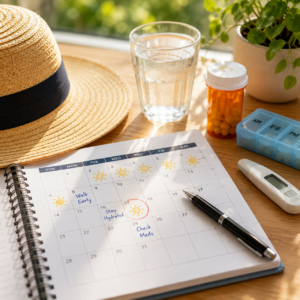
When checking your blood pressure, follow the monitor’s instructions and try to measure under similar conditions each time. Keep a simple record of the reading, time, symptoms, recent activity, and medication schedule. Bring that record to your medical appointment.

Warning signs to take seriously

Early heat-related symptoms may include:
  • Unusual thirst or dry mouth
  • Headache
  • Weakness or fatigue
  • Muscle cramps
  • Heavy sweating
  • Nausea
  • Dizziness or lightheadedness
  • Feeling faint
Move to a cooler place and seek medical guidance if symptoms concern you, worsen, or do not improve. Vomiting, persistent faintness, or an inability to drink fluids deserves prompt attention.
Heat stroke is a medical emergency. Call 911 for confusion, slurred speech, loss of consciousness, seizures, very hot skin, or other severe symptoms. Move the person to a cooler environment if it is safe to do so while waiting for emergency help.

Practical ways to reduce heat-related risk

Talk with your healthcare team before extreme heat arrives

Ask your physician or pharmacist whether any of your prescriptions affect sweating, thirst, sun sensitivity, fluid balance, or heat tolerance. Find out what symptoms should trigger a call and whether you need a personal plan for monitoring blood pressure.

Plan around the temperature

When possible, schedule outdoor activity for cooler parts of the day. Take frequent breaks in shade or air conditioning, especially when working, exercising, gardening, or attending outdoor events.

Drink fluids according to your medical needs

Do not wait until you feel severely thirsty. However, fluid needs are not the same for everyone. People with heart failure, kidney disease, or other conditions may have specific limits. Ask your clinician how much and what type of fluid is appropriate for you.

Dress for the weather

Choose loose, lightweight clothing and use sun protection outdoors. If a medication increases sun sensitivity, ask a pharmacist about appropriate precautions.

Use a buddy system

If you work or spend extended time in a hot environment, let someone know about your heat-safety plan. Check on each other for confusion, unusual fatigue, or other warning signs that may be easier for another person to notice.

Protect medications from heat and humidity

Medication safety includes proper storage. A hot vehicle, sunny windowsill, or humid bathroom can expose medicine to conditions outside its recommended range. Keep prescriptions in a cool, dry location and follow the storage instructions on the label or pharmacy information sheet.

Some medicines have special temperature requirements. Ask your pharmacist how to transport or store them during travel, power outages, or extreme weather. Do not use a product that looks damaged or has been stored improperly until a pharmacist advises you.

Make a summer safety plan

The goal is not to fear warm weather. It is to understand how heat, dehydration, health conditions, and medication may interact.
Before temperatures climb, review your prescriptions, identify a cool place you can go, keep a reliable blood-pressure monitor available if your clinician recommends one, and know whom to call when readings or symptoms change. A few preparations can make it easier to enjoy summer safely.

If you have questions about whether your health plan covers primary care, cardiology, medication reviews, urgent care, or other services, Kannonball Insurance Solutions can help you understand your coverage options.

Kannonball Insurance Solutions LLC
Call: 254-918-5444
Visit: www.kbisolutionsllc.com

Source and medical note

This educational article was adapted and independently written using information from SingleCare’s “Why your blood pressure numbers go haywire in the summer,” written by Karen Berger, Pharm.D., and published July 6, 2026: Read the original SingleCare article.

This content is for general educational purposes only. It does not diagnose or treat any condition and is not a substitute for advice from your physician or pharmacist. Never stop, start, or change the dose of a medication without instructions from the prescribing healthcare professional. Call 911 for symptoms of heat stroke or another medical emergency.